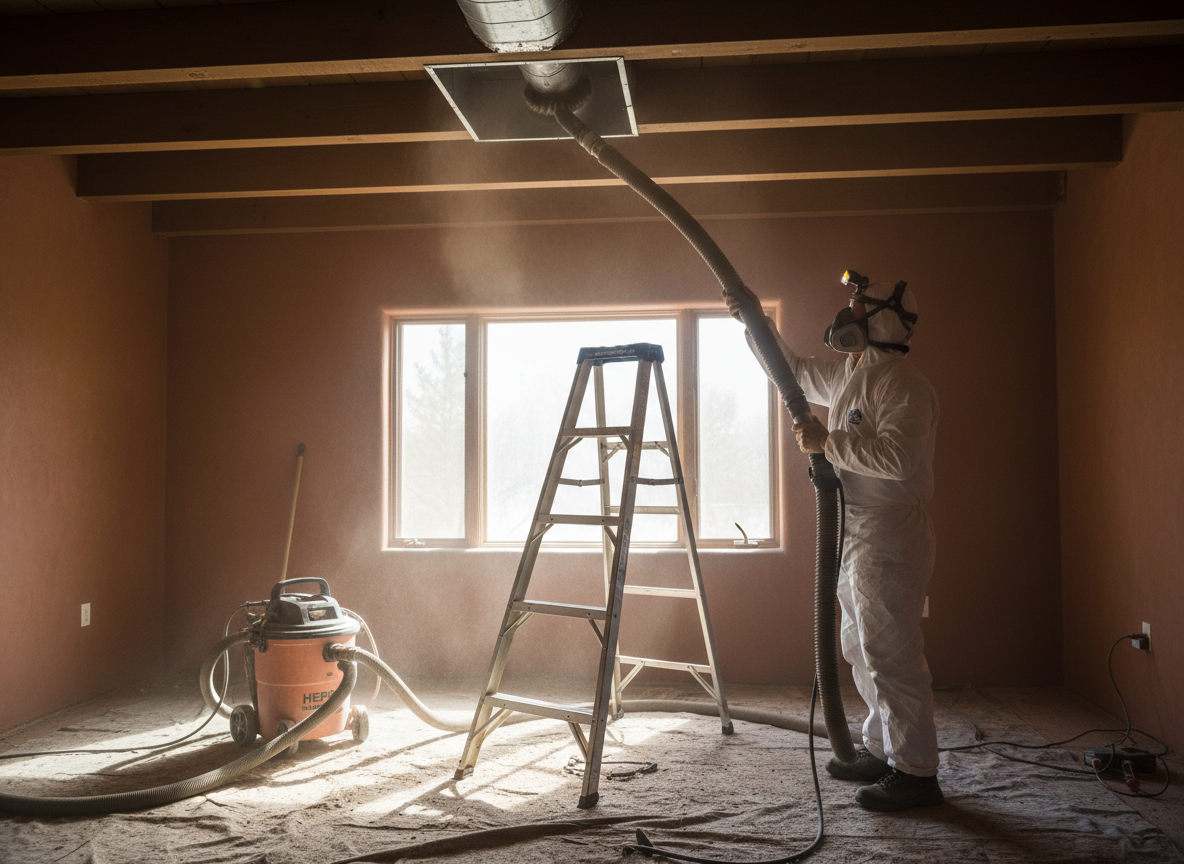
In Yavapai County homes around Camp Verde and Middle Verde, high desert conditions with warm days and cool nights drive constant dust infiltration through vents and older duct seams. Many properties near Fort Verde State Historic Park feature aging HVAC systems installed decades ago that trap pollen carried from Sedona and Cottonwood. Cleaning focuses on removing fine particulate that triggers seasonal allergies rather than surface dust alone. Technicians use negative-pressure equipment to avoid spreading debris into living spaces during the process.
Edge cases include homes with flex duct runs that have sagged over time, creating low spots where moisture from cool nights condenses and supports mold growth alongside allergens. Near Montezuma Castle National Monument, wind patterns push extra grit into systems on exposed ridges. Crews inspect for disconnected sections or crushed lines common in crawlspaces of 1970s-1990s builds before any vacuuming begins. Skipping these checks often leaves hidden pockets untouched.
Homeowners sometimes attempt DIY filter changes only to dislodge settled material deeper into the trunk lines. Professional equipment reaches branch runs that standard household vacuums cannot access. In this climate, scheduling after the first cool snap captures the heaviest pollen load before winter heating recirculates it daily.
Technician insight
In Camp Verde the thing that catches most people out with air duct cleaning for allergies is how the nightly temperature drop pulls pollen in through every small gap in older ductwork near Fort Verde. Homeowners replace filters religiously but never realize the trunk lines behind the walls hold years of fine Yavapai dust that only moves when the heat kicks on.
Middle Verde Allergy Relief
A homeowner in Middle Verde reported persistent sneezing when the furnace ran. Inspection found collapsed flex duct near the crawlspace holding thick layers of desert grit and pollen from nearby Sedona winds. Crews restored negative pressure, cleared the lines, and resealed connections. Allergies improved noticeably within days.
How it works
- 1
Initial Inspection
Technician examines all accessible registers, returns, and the furnace or air handler to map duct layout and note any visible damage or debris.
- 2
System Isolation
Registers are sealed and the system is set to negative pressure to contain dust during cleaning.
- 3
Agitation and Extraction
Rotating brushes and compressed air tools loosen material while a HEPA vacuum pulls it from the trunk and branches.
- 4
Final Verification
Each section is re-inspected and the system is run to confirm airflow and absence of residual dust.
Pricing
Cost depends on number of runs, access difficulty, and whether flex duct repairs are needed.