In Camp Verde and Middle Verde, many homes built decades ago sit on larger lots with longer dryer vent runs that snake through attics or under crawl spaces before exiting near the roofline. High desert dust and cottonwood pollen from nearby Cottonwood and Sedona quickly build up inside flexible duct sections, especially where turns create low spots that trap lint. Rigid metal vents hold up better than the plastic or foil flex that older properties often still have, but both types need periodic disassembly because a single clogged elbow can push lint back into the dryer and raise exhaust temperatures.
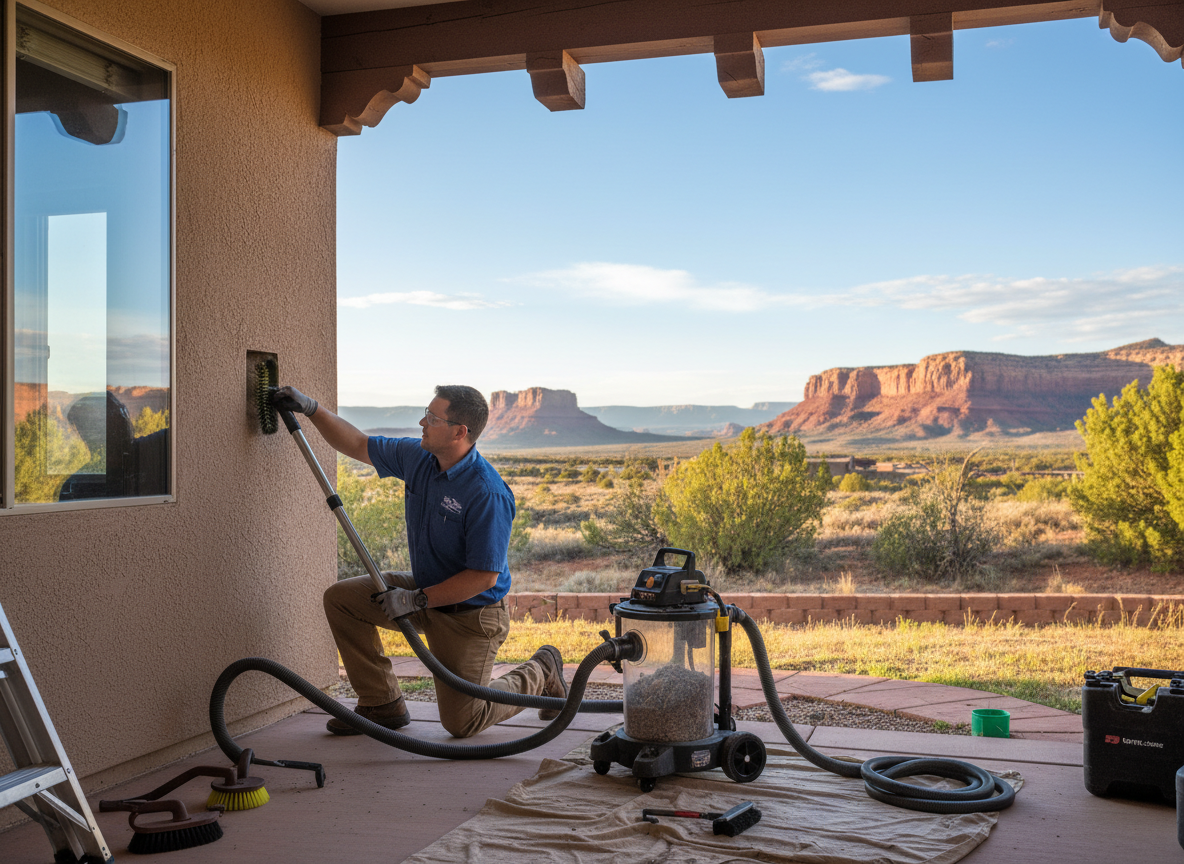
Homeowners near Fort Verde State Historic Park and along Finnie Flat Road frequently report longer drying times after monsoon season when overnight humidity spikes followed by warm daytime winds push fine particles deeper into the line. We always check the exterior termination cap first because bird nests and wind-blown debris from the surrounding Yavapai terrain commonly block the outlet even when the indoor section looks clear. Disconnecting the vent at the dryer, running a rotary brush the full length, and vacuuming from both ends removes the compacted lint that handheld attachments miss.
We also inspect the dryer’s internal lint trap housing and the transition duct behind the appliance, areas where buildup creates a secondary fire path. After cleaning we reattach with proper metal clamps and verify airflow with a flow meter so the homeowner can see the immediate improvement. This work is especially useful for properties that have added second-story laundry rooms or extended vent runs to meet setbacks required in the county.
Camp Verde’s temperature swings between hot afternoons and cool nights cause metal ducts to expand and contract, loosening connections over time and allowing more dust entry. Addressing these joints during every visit prevents the gradual restriction that forces the dryer to run longer cycles and shortens appliance life.
Technician insight
In Camp Verde the thing that catches most people out with dryer vent cleaning is how quickly desert dust packs into the last few feet near the roof exit on homes built before the 1990s. Those long horizontal runs under low-slope roofs common along Finnie Flat Road trap fine particles that a standard shop-vac never reaches, so the line looks clean until you pull the cap and see the actual blockage.
Extended Vent Run Near Middle Verde
A homeowner in Middle Verde noticed clothes still damp after two cycles. We found a 28-foot run with three elbows that had collected years of fine Yavapai dust. After full disassembly and brushing we restored strong airflow and the dryer finished loads on the normal setting.
How it works
- 1
Initial Inspection
We examine the full vent run from dryer to exterior termination, noting duct material, length, and any visible restrictions common in Camp Verde homes.
- 2
Disconnect And Access
The vent is detached at both ends so we can reach the entire line without forcing tools through tight bends typical of older Middle Verde construction.
- 3
Mechanical Cleaning
A rotary brush and high-volume vacuum remove compacted lint from rigid and flexible sections while we check for crushed or separated joints.
- 4
Reassembly And Test
Connections are secured with metal clamps, the exterior cap is cleared, and airflow is measured to confirm the vent is moving air freely again.
Pricing
Cost varies with vent length, number of elbows, and access difficulty in single-story versus two-story homes.