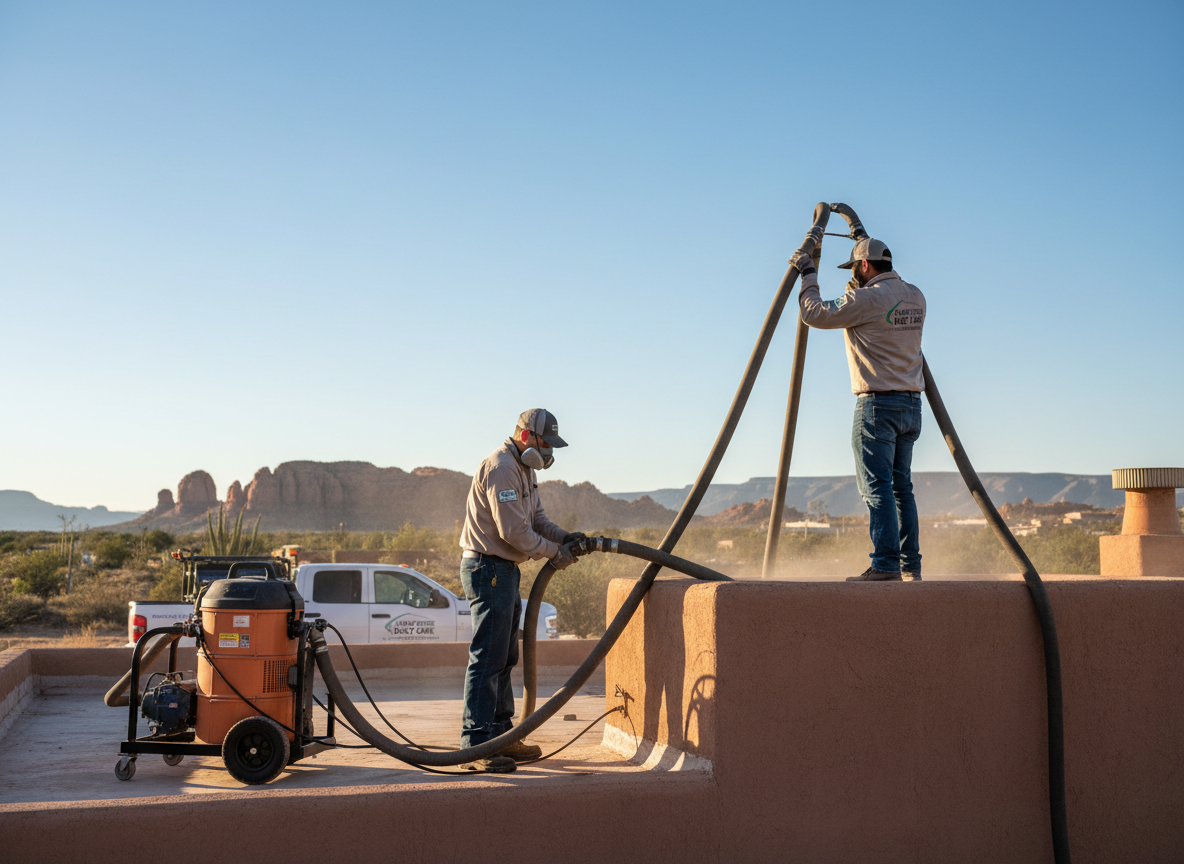
Homes built decades ago around Fort Verde State Historic Park and in Middle Verde often have duct runs that snake through unconditioned attics or crawl spaces where fine Yavapai County dust infiltrates every seam. Warm daytime temperatures followed by rapid nighttime cooling create constant expansion and contraction that loosens accumulated debris inside the metal. Standard vacuuming alone leaves behind the heavier particles that settle in the lower trunk lines near the furnace.
Near Montezuma Castle National Monument the wind carries extra silt from the Verde River valley into unsealed return grilles. Residents in these neighborhoods notice heavier dust on surfaces within days of a cleaning if the technician skips the final negative-pressure verification step. Proper work requires isolating each branch run and using brushes sized to the actual duct diameter rather than a one-size approach.
Cottonwood and Sedona commuters who live in Camp Verde frequently report musty odors after monsoon season because moisture from the brief rains mixes with the ever-present dust load. Technicians who only clean the main plenum miss the vertical risers that serve second-story bedrooms, allowing the odor to recirculate. A complete job includes checking the dryer vent transition and any passive return paths cut through interior walls.
High Desert Dust Patterns
Seasonal wind events from the southwest push additional grit into systems that lack modern filtration. Homeowners who replace filters on a fixed schedule rather than by pressure drop often discover the media has already bypassed, allowing fine particles to coat the entire duct interior.
Technician insight
In Camp Verde the thing that catches most people out with air duct cleaning is the fine high desert dust that packs into the lower horizontal runs of older homes near Fort Verde State Historic Park once nights turn cool after warm days.
Middle Verde ranch house
Homeowner noticed persistent dust on surfaces two days after opening windows during a wind event. Inspection showed heavy silt in the return trunk feeding the main living area. We isolated the line, agitated and extracted the material, then verified airflow across all registers. The family reported clearer air within hours of completion.
How it works
- 1
Initial Walk-Through
Technician inspects every accessible register and the furnace location to map duct routes common in Camp Verde construction.
- 2
Negative Pressure Setup
Equipment creates containment so loosened material travels only to the collection point rather than into living spaces.
- 3
Mechanical Agitation
Brushes sized for the actual duct diameters dislodge debris without damaging older sheet-metal joints found in Middle Verde homes.
- 4
Final Verification
Each branch is checked for remaining material before the system is returned to normal operation.
Pricing
Upfront quotes reflect system size, number of branch runs, and access conditions typical of Yavapai County homes.