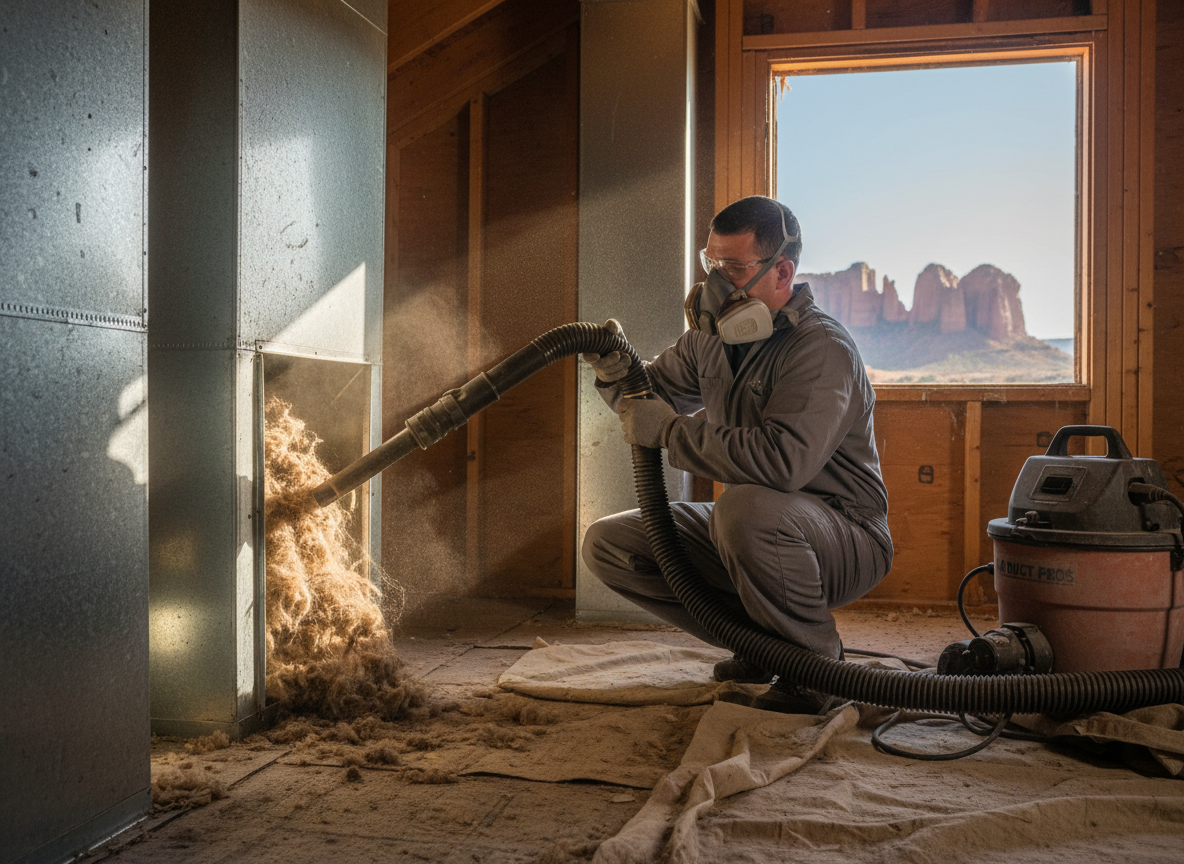
In Yavapai County homes near Fort Verde State Historic Park and along the Verde River, pet hair mixes with fine high-desert dust that blows in from surrounding mesas. Older single-story houses common in Middle Verde and Camp Verde often have flex duct runs that trap hair near elbows and registers, reducing airflow especially when nights cool quickly after warm days. Standard vacuuming misses compacted layers along the bottom of main trunks, so technicians use rotating brushes sized for 6- to 8-inch residential lines followed by negative-air machines to pull debris without disturbing attic insulation.
High desert temperature swings cause duct joints to expand and contract, creating small gaps where pet dander escapes into living spaces. Homes within a few miles of Montezuma Castle National Monument frequently sit on gravelly soil that tracks in extra grit on paws, accelerating buildup inside returns. Crews inspect every accessible boot and plenum before cleaning, because collapsed sections or previous tape repairs common in Sedona-adjacent properties can tear during aggressive brushing.
After the initial pass, technicians fog the system with a mild, pet-safe sanitizer to neutralize dander proteins that remain on metal surfaces. This step matters in Cottonwood and Camp Verde because low humidity keeps dander airborne longer once the system restarts. Final register cleaning and a post-job airflow check confirm the difference before the crew leaves.
Seasonal Timing
Spring winds and fall shedding periods create the heaviest loads in Yavapai County. Scheduling before the first cool nights of October prevents the furnace from pushing loosened hair through the house. Summer monsoons add moisture that can mat hair against duct walls, requiring longer dwell times with agitation tools.
Technician insight
In Camp Verde, the thing that catches most people out with pet hair duct cleaning is how the fine red dirt from local roads mixes with long dog hair inside the low spots of flex duct that runs through unconditioned attics; once it cakes during the dry high-desert winters it takes twice the agitation time compared with homes in greener parts of Cottonwood.
Middle Verde Ranch House
Homeowner noticed reduced airflow and increased sneezing after two large dogs spent the summer inside. Inspection revealed hair mats blocking the main return near the air handler. Crew removed the mats with brushes and negative air, then treated the lines. Airflow returned to normal and the family reported fewer morning allergy symptoms.
How it works
- 1
Initial Inspection
Technician maps every supply and return run from the air handler located in the garage or attic, noting pet traffic patterns through the home.
- 2
Access and Containment
Registers are removed and floor openings sealed with plastic to keep hair from spreading into occupied rooms during agitation.
- 3
Mechanical Cleaning
Rotating brushes and compressed-air whips loosen compacted hair and desert dust while the vacuum maintains continuous negative pressure.
- 4
Sanitizing and Verification
A light fog is applied, then each run is checked with a camera before registers are reinstalled and airflow is measured at the farthest vents.
Pricing
Cost depends on number of runs, access difficulty in older homes, and whether collapsed flex duct must be replaced.